
Key takeaway
If slow drains, smells or overflows keep coming back, affect more than one fixture, or start showing up outdoors as well as indoors, it is usually time to call a drainage specialist rather than keep treating it as a simple sink blockage.
TradeKind helps homeowners find local Sussex trades
Browse approved local trade profiles, compare nearby Sussex trades or post a job for free.
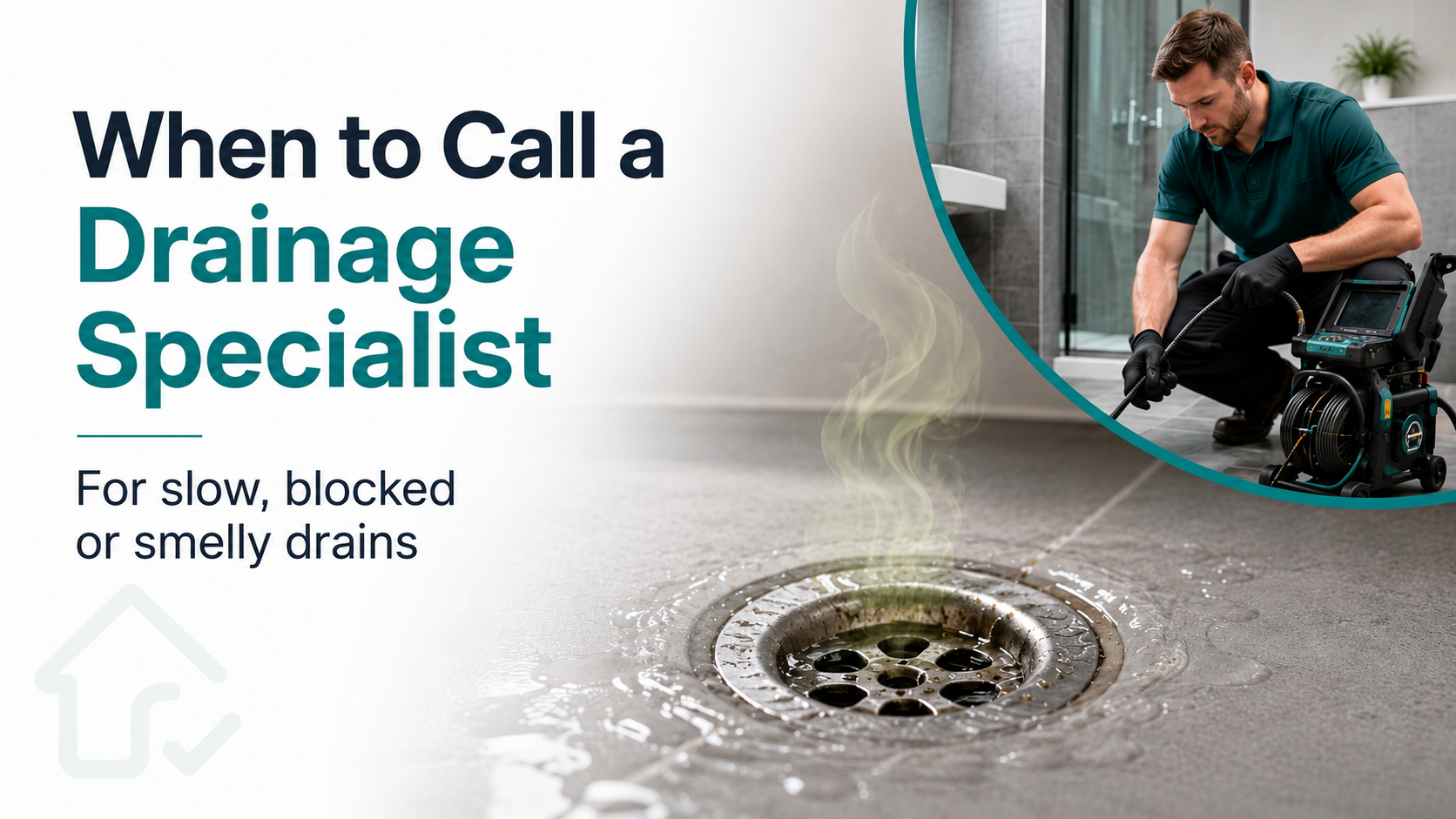
When to Call a Drainage Specialist for Slow, Blocked or Smelly Drains
A slow sink is annoying. A blocked loo is inconvenient. A drain that smells or overflows outside can make the whole home feel harder to manage.
The tricky part is knowing when you are dealing with a small, local blockage and when the problem is bigger than a quick fix. A drainage specialist is the right trade when the signs point to pipework, shared drainage, repeated blockages or an issue you cannot confidently trace to one fitting.
This guide helps you judge the symptoms, check a few basics before you book, and explain the problem clearly so the tradesperson can diagnose it faster.
When a drainage specialist is the right trade
A drainage specialist is usually the right call when the problem is not limited to one obvious fixture. For example:
- more than one drain is slow at the same time
- water backs up in one place when you use another
- a toilet, sink or shower starts gurgling after use
- the same blockage keeps returning
- there is a persistent foul smell from drains, gullies or outside pipework
- an outdoor gully, surface drain or manhole appears to be overflowing
- water is draining, but far more slowly than normal across several fittings
These symptoms suggest the issue may be deeper in the drainage system, not just in the visible trap under a sink.
Signs it may be a simple local blockage
Some problems are more likely to stay local to one fitting. That does not mean they are harmless, only that the cause may be nearer the fixture itself.
Examples include:
- one sink draining slowly while other sinks and baths behave normally
- a plughole with a build-up of hair or soap residue
- a smell coming from one unused drain or a little-used room
- water sitting in the basin but not affecting other parts of the home
If the issue is confined to one fixture and does not affect the rest of the home, it may be smaller in scale. But if the symptom comes back quickly, spreads to other fittings or starts affecting the same drain again and again, that is a sign to bring in a drainage specialist.
Symptoms that suggest a blocked pipe rather than a sink issue
A blocked pipe is more likely when the drainage problem behaves like part of a system fault instead of a single fixture fault.
Look out for these patterns:
1) More than one fitting is affected
If the kitchen sink, utility sink and shower are all slow, the problem is unlikely to be limited to one trap or one plughole. The blockage may be further along the pipework or in a shared branch.
2) Water appears somewhere unexpected
If flushing a toilet causes water to rise in a shower tray, or running a tap makes a nearby drain gurgle, the issue may be in the connected drainage line rather than the fitting you are using.
3) The problem gets worse over time
A drain that starts off just sluggish and becomes regularly blocked may be showing an increasing restriction in the pipework. That can happen when debris builds up or when there is a deeper fault that keeps catching waste.
4) Smell is persistent, not occasional
A one-off smell can come from a little-used drain. A continuing sewage-like smell, especially alongside slow drainage or gurgling, can point to a problem beyond a simple clean.
5) Outdoor drainage is involved
If an outside gully, drain cover or manhole is backing up, overflowing or smelling strongly, the issue may be beyond the internal fixtures and need specialist attention.
When repeated blockages mean you need more than a clear-out
A blockage that comes back is one of the clearest signs that the underlying problem has not been solved.
Repeated blockages can mean:
- the pipe was only partly cleared
- waste is catching on a deeper obstruction
- the drainage route has a build-up that keeps narrowing the pipe
- there is a fault in the pipe alignment or a damaged section
- the issue is outside the home but still affecting your drains
If you have already had a drain cleared and the same symptoms return soon afterwards, do not treat that as business as usual. A drainage specialist may need to inspect the line more fully rather than repeating the same basic clearance.
What to check before booking a drainage specialist
You do not need to diagnose the fault yourself. A few practical observations will help the tradesperson arrive prepared and work out the likely cause faster.
Note exactly what is affected
Be ready to say whether the issue is in:
- one sink
- several indoor fittings
- a toilet
- a shower or bath
- an outdoor gully or surface drain
- a manhole cover or external drain point
The more specific you are, the easier it is to distinguish between a local fixture problem and a system-level blockage.
Check whether other drains react
This is one of the most useful clues. For example, if running the kitchen tap makes the shower gurgle, or flushing a toilet causes another drain to rise, tell the tradesperson. That reaction can point to the location of the problem.
Think about when the issue started
A drainage problem that appeared suddenly after a period of normal use can suggest a new blockage. A slower change over time may point to a build-up or a fault that has been developing.
Notice any smell, sound or overflow
These details matter:
- bad smell
- gurgling
- bubbling water
- slow emptying
- visible backup
- overflow outside
- damp patches near drains or inspection points
Even if each sign seems small on its own, together they help build the picture.
Check whether any recent changes may be relevant
If you know there has been heavier-than-usual use, a lot of guests, a lot of cooking grease going through the kitchen, or a recent change in how the home is used, mention that. You are not expected to solve the cause, only to give useful context.
Check who is responsible before booking
If only your property is affected and the blockage appears to be within your boundary, you may need a private drainage specialist. If neighbouring properties are also affected, or the problem appears to involve a shared or public sewer, contact Southern Water first. Tenants should normally report the problem to their landlord or managing agent.
What a drainage specialist may inspect
The exact approach depends on the symptoms, but a professional will usually look at the drainage system as a whole rather than just the most obvious blocked point.
They may inspect:
- the affected internal fixture or fixtures
- connected pipework
- external gullies and drain covers
- the route where the blockage may be forming
- signs of recurring build-up or restricted flow
- evidence that the problem is local or system-wide
They may also try to identify whether the fault is a simple obstruction or something that keeps creating blockages. That distinction matters because a short-term clear-out can be the wrong answer if the issue is recurring.
A simple decision guide for homeowners
Use this quick guide to judge the likely next step.
Likely a minor local issue
- only one fitting is affected
- other drains work normally
- there is no outside overflow
- the problem does not keep returning
In this case, the issue may still need attention, but it may not require a drainage specialist if it stays confined to one fixture.
Likely time to call a drainage specialist
- two or more drains are affected
- there is gurgling, smell or backup in more than one place
- a previous clear-out did not solve it
- an outside drain or gully is involved
- the problem is getting worse
Treat as urgent
- wastewater is overflowing
- a drain is backing up quickly
- the smell is strong and persistent
- several fixtures are unusable
- outdoor drainage is visibly failing
In those cases, it is sensible to arrange help promptly rather than waiting to see if the problem disappears.
What to say when you book the job
A short, well-structured description can save time and reduce back-and-forth.
You could say:
"We have a slow drain and a bad smell, and it seems to affect more than one fitting. The problem has come back after being cleared before. An outdoor gully may also be involved."
Or:
"The kitchen sink is fine, but the shower and toilet gurgle when water is used elsewhere, and the drain outside is starting to overflow."
That kind of detail gives the tradesperson a better starting point than simply saying the drain is blocked.
Homeowner briefing template
If you want to be ready for the call, jot down:
- which room or outside point is affected
- whether one or several drains are slow
- whether there is smell, gurgling or overflow
- when it started
- whether it has happened before
- whether anything else reacts when taps or toilets are used
- whether the issue seems constant or intermittent
You do not need to be technical. You just need to describe the pattern clearly.
The main thing to remember
Slow drains are often the first sign of a bigger drainage issue, especially when the symptom spreads, returns or affects several parts of the home. If the problem looks more like a system fault than a single blocked sink, a drainage specialist is the right trade to call.
If you are ready to get help, Post a job and describe the symptoms as clearly as you can.
Frequently asked questions
Which drain symptoms suggest a blocked pipe rather than a simple sink issue?
If more than one fitting is affected, water backs up elsewhere when another drain is used, or the problem keeps returning after clearing the visible trap, the issue may be further along the pipework rather than just in the sink itself.
What should you check before booking a drainage specialist?
Note which fixtures are affected, when the problem started, whether it is getting worse, and whether there are smells, gurgling sounds, slow-emptying sinks, outdoor gully overflow or water backing up after heavy use. That information helps the tradesperson narrow down the likely cause.
When do repeated blockages mean the problem is beyond a basic clear-out?
If the same drain blocks again soon after clearing, or if several drains are affected at once, the cause may be a deeper obstruction, a collapsed section, poor pipe fall or another fault that needs professional inspection rather than another short-term clearance.
What details help a tradesperson diagnose the issue faster?
Tell them which rooms or outdoor drains are affected, whether the blockage is partial or complete, any smell or overflow, whether the problem is constant or intermittent, and whether other drains react when you run taps, flush toilets or use appliances.
Explore trades across Sussex
These are some of the main trades and Sussex areas you can browse on TradeKind. You can also explore many more trades, towns and villages across East Sussex and West Sussex, including Brighton & Hove.
Browse by Sussex area
Browse by trade
Can’t see what you need? Browse the full Sussex Trades Directory to explore more trades and areas.
Browse all trades and areasNeed a local Sussex trade?
TradeKind connects Sussex homeowners with local trades — free to use, with no hidden fees.