
Key takeaway
Before calling a roofer, gather clear photos, write down where and when you noticed each sign, and avoid touching the roof yourself so the inspection starts with accurate information and fewer risks.
TradeKind helps homeowners find local Sussex trades
Browse approved local trade profiles, compare nearby Sussex trades or post a job for free.
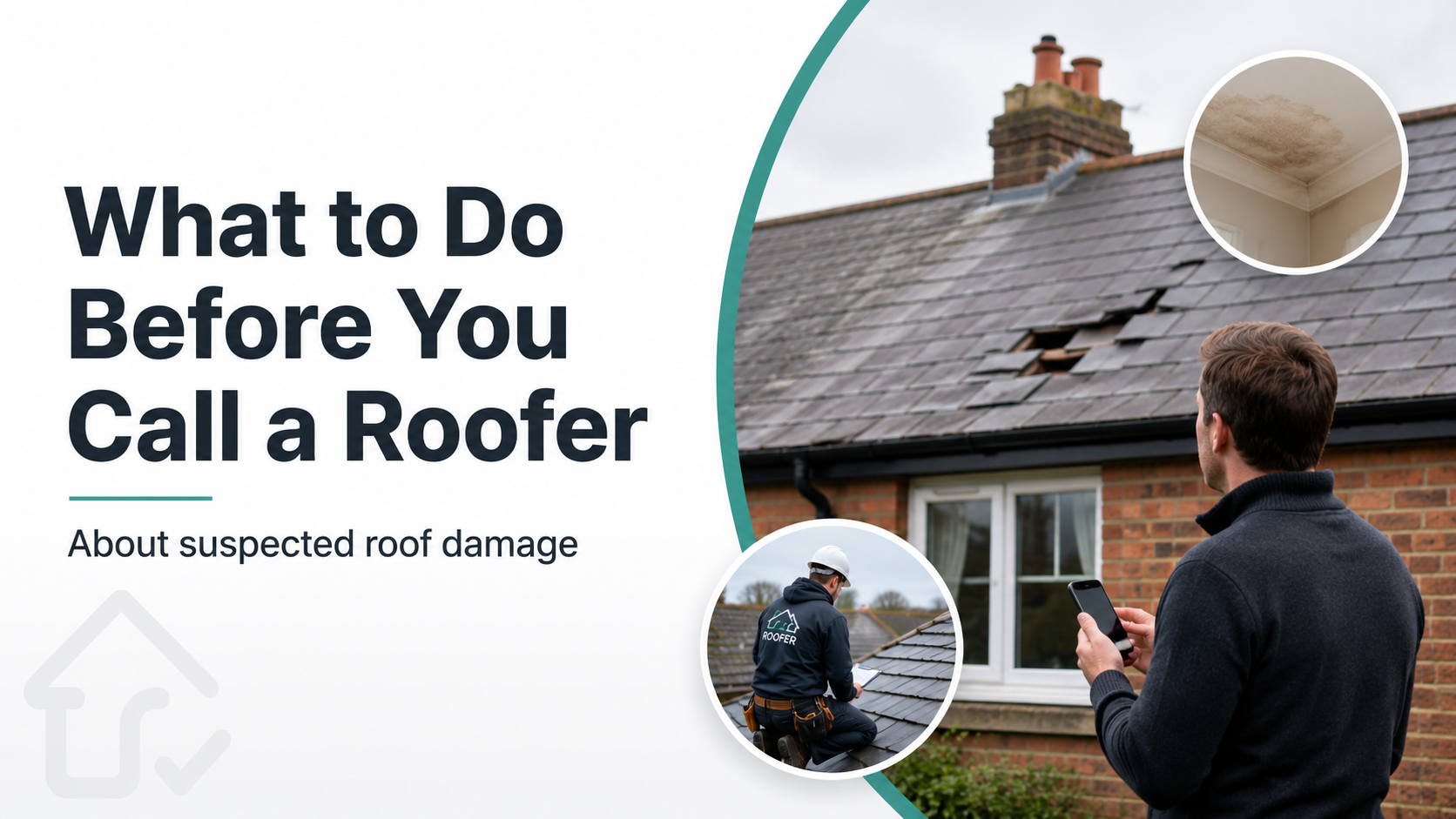
What to Do Before You Call a Roofer About Suspected Roof Damage
Noticing a problem with your roof can be unsettling. A slipped tile, a damp patch on the ceiling or debris on the ground does not always mean there is major damage, but it does mean you should act carefully. The best first step is not to start repairing anything yourself. It is to gather enough clear information so a roofer can understand the issue quickly and give you a fair inspection.
This guide explains what to check before you contact a roofer, what to photograph, how to describe the problem clearly, and what to avoid until a professional has looked at it. It is designed to help you choose and brief a roofer with confidence after you have noticed suspected roof damage.
Start by deciding whether this is a roofer job
Some home issues can wait for a general odd job visit. Roof damage usually should not. If the problem involves the roof covering, flashing, ridge, valley, gutter edge, chimney junction, loft water ingress or visible movement in roof materials, a roofer is the right trade to speak to.
As a simple rule, book a roofer rather than a handyman when you notice any of the following:
- missing, slipped, cracked or broken roof tiles or slates
- water coming into the loft or top floor after rain
- damp patches that appear near the ceiling, chimney breast or upstairs walls
- daylight visible through the roof space where it should not be
- debris from the roof on the ground
- damaged flashing, ridge pieces or mortar around roof details
- sagging, uneven lines or anything that looks out of place on the roof surface
If the issue is connected to the roof itself, a roofer is usually better placed to judge both the visible damage and the hidden causes.
Make a quick safety-first check from the ground
You do not need to climb anything to make a useful first assessment. In fact, you should avoid that. Use your eyes from a safe position outside and, if needed, a torch inside the loft or top-floor rooms.
Look for:
- obvious changes to the roofline
- pieces of tile, slate or mortar on the ground
- guttering that appears bent, displaced or filled with debris
- signs of water staining on upstairs ceilings or walls
- wet insulation or damp timber in the loft, if you can see it safely from the loft hatch
- any place where the roof looks darker, patchy or uneven compared with the rest
If you can only see a small part of the roof, that is fine. A good roofer will know that a ground-level look is only the starting point.
What to record before you ask for quotes
A short set of notes can make the inspection much more useful. Try to write things down while the details are fresh.
Include:
- the date and time you first noticed the problem
- whether it appeared after rain, wind or another event
- the exact location in the house where you noticed signs indoors
- which side of the house seems affected, if you can tell
- whether the issue seems new, recurring or getting worse
- any noises you noticed, such as drips or movement in the loft
- whether there are children, pets or vulnerable people in the rooms affected
You do not need to diagnose the cause. The point is to give the roofer a clear starting point.
Take photos that help the roofer assess the problem
Photos are one of the most useful things you can provide before an inspection. They help the roofer understand the scale of the issue and decide what equipment or access may be needed.
Take photos of:
- the roof from the ground, from several angles if safe to do so
- the exact area where you can see damage, even if it is distant
- any fallen pieces on the ground
- the inside signs, such as stains, drips, peeling paint or damp patches
- the loft area, if you can safely photograph visible staining or daylight from the hatch
A few tips make the photos more helpful:
- take one wider shot and one closer shot of each issue
- keep the images in the order you noticed the problem, if possible
- avoid zooming so far that the picture becomes blurred
- include a reference point, such as the chimney, gutter line or dormer, so the roofer can identify the location
You are not trying to produce a technical survey. You are trying to give the roofer enough context to ask better questions and arrive prepared.
Questions that help compare roof inspections fairly
If you contact more than one roofer, ask each one the same basic questions. That makes it easier to compare the inspections fairly and avoid misunderstandings.
Useful questions include:
- What do you think needs checking first?
- Will you inspect the roof surface, flashing and visible roof details as part of the visit?
- Are you giving an inspection only, or also quoting for repair work?
- What information would help you assess the problem before you visit?
- If you find more than one issue, how will you explain what is urgent and what is less pressing?
- Will you need access to the loft or only the outside of the property?
You are not looking for a long technical explanation before they have seen the roof. You are looking for a clear process and a consistent approach.
How to brief a roofer clearly
When you speak to the roofer, keep your summary short and factual. A simple structure works well:
- What you saw.
- Where you saw it.
- When you first noticed it.
- Whether it got worse after weather or over time.
- What photographs you have.
For example:
- “I noticed a damp patch on the upstairs ceiling after heavy rain.”
- “There are a few broken tiles visible from the garden.”
- “I can see some debris in the driveway under the roof edge.”
That is enough to begin a proper conversation without over-explaining or guessing at the cause.
What to avoid before the roofer arrives
This is the part many homeowners get wrong. Once you suspect roof damage, it is tempting to investigate more closely. Try not to.
Avoid:
- climbing on the roof or trying to look for damage from unsafe positions
- moving loose tiles, slates or flashing
- applying sealant, tape or makeshift patches
- scraping away material to “see what is underneath”
- disturbing the loft insulation around a damp area
- assuming the leak source is exactly above the indoor stain
- asking multiple people to “have a quick look” if that means more people climbing around the roof
Some roof issues are more fragile than they look. Disturbing them can make the problem worse or make it harder for the roofer to identify the original fault.
How to tell the roofer what matters most
If you are worried about a leak indoors, say so first. If the main concern is visible roof damage but no water inside yet, say that too. Prioritising the most urgent symptom helps the roofer decide how quickly the inspection needs to happen.
A useful order is:
- active water ingress
- visible roof movement or missing sections
- repeated damp patches
- loose material or debris
- general wear that you noticed while looking from the ground
You do not need to rank everything perfectly. Just tell the roofer what is happening now and what has changed.
What a fair inspection should leave you with
A decent roof inspection should help you understand:
- what the roofer thinks the problem is
- whether the issue looks urgent
- what parts of the roof need closer attention
- whether access to the loft or other areas is needed
- whether the next step is repair, monitoring or a more detailed survey
If a roofer cannot explain the basics clearly, ask for them to restate the findings in plain English. You should come away knowing what was seen and why it matters.
A simple homeowner briefing template
Before you make the call, have this ready:
- address and best contact details
- short description of the issue
- date first noticed
- where it appears indoors or outdoors
- photos saved and ready to send
- any access notes, such as pets, parking or loft entry
- whether the problem seems active or has stopped for now
This saves time on both sides and gives the roofer a better chance of arriving prepared.
If the problem seems small, still treat it seriously
Small roof defects can sometimes point to a larger issue behind them. A single loose tile might be straightforward, but it might also be a sign of movement, age or a failed fixing. Likewise, a small stain indoors can hide a more widespread leak path.
That is why the best approach is to avoid guesses, collect evidence and let a roofer inspect it properly.
Final check before you make contact
Before you call or send your enquiry, ask yourself:
- Have I taken clear photos?
- Have I written down when I first noticed it?
- Have I avoided touching or climbing onto the roof?
- Have I identified the main symptom clearly?
- Am I asking a roofer, not a general repairer, because the problem involves the roof itself?
If the answer is yes, you are ready to brief a roofer properly.
The practical next step
Once you have your notes and photos ready, compare a few roof inspections on the same basis and choose the roofer who explains the problem clearly and treats the issue with the right urgency. If you are ready to start, Post a job and describe what you have seen as clearly as you can.
FAQ
Should I wait for dry weather before contacting a roofer?
No. You can contact a roofer as soon as you notice suspected damage. The inspection can still be planned around safe access and weather conditions.
Do I need to know exactly which tile is damaged?
No. A rough location, plus photos and notes, is usually enough for the roofer to understand where to begin.
Can I ask for a quote from just one roofer?
Yes, but if you want to compare inspections fairly, it helps to speak to more than one and use the same description and photos for each.
Should I mention a ceiling stain even if the roof damage looks minor?
Yes. Interior staining is useful information because it helps the roofer understand how the issue is showing itself inside the property.
Frequently asked questions
When should a roofer inspect instead of a handyman?
If the issue involves missing tiles, damaged flashing, leaks, sagging, storm impact or anything that may affect the weatherproofing of the roof, you should speak to a roofer rather than a general handyman. A roofer is better placed to judge the roof covering, underlay, fixings and safe access needs.
What photos should I take before asking for quotes?
Take clear photos from ground level of every visible sign of damage, plus wider shots that show where each issue sits on the roof. It also helps to photograph damp marks indoors, fallen debris on the ground and any close-up details you can safely capture from outside without climbing.
How do I compare roof inspections fairly?
Ask each roofer to inspect the same areas, explain what they think is urgent, and set out whether they are quoting for inspection only or for repair work as well. Keep your description of the problem consistent so you are comparing like with like.
What should I avoid doing before the roofer arrives?
Do not climb onto the roof, disturb loose materials or try to seal anything yourself. Avoid moving damaged pieces unless they are already on the ground and clearly safe to handle, and do not assume a leak is coming from the exact spot where the water shows indoors.
Explore trades across Sussex
These are some of the main trades and Sussex areas you can browse on TradeKind. You can also explore many more trades, towns and villages across East Sussex and West Sussex, including Brighton & Hove.
Browse by Sussex area
Browse by trade
Can’t see what you need? Browse the full Sussex Trades Directory to explore more trades and areas.
Browse all trades and areasLocal Sussex trades mentioned
Keep reading
When to Call a Drainage Specialist for Slow, Blocked or Smelly Drains
Slow drains, recurring blockages and bad smells can point to anything from a simple local blockage to a deeper drainage fault. This guide helps homeowners spot the signs that a drainage specialist is the right trade, decide what to check before booking, and describe the problem clearly so the diagnosis is quicker.
How to Find a Reliable Tradesperson in Sussex
A practical Sussex homeowner guide to finding, checking and choosing a reliable local tradesperson for repairs, improvements and larger home projects.
Need a local Sussex trade?
TradeKind connects Sussex homeowners with local trades — free to use, with no hidden fees.